
Loading...
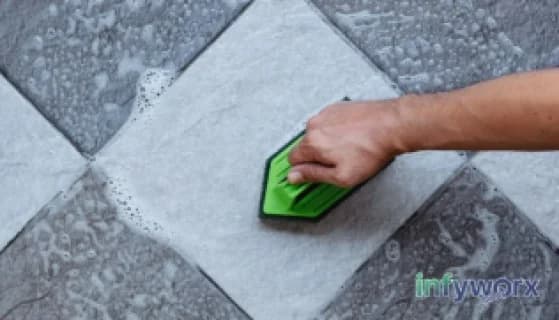
Tiles rarely fail. Grout does, and it takes the whole floor down with it. InfyWorx provides commercial tile and grout scrubbing to hotels, kitchens, retail centres and care facilities across Australia, using machines and chemistry that actually shift the build-up.
The floor is degreased, then worked with rotary or cylindrical machines that drive the solution into the grout lines. Dirty solution is extracted rather than pushed to the edges, which is the difference between a clean floor and a wet one. Edges, corners and skirting are done by hand, because no machine reaches them properly.
Commercial kitchens usually need machine scrubbing monthly or quarterly, since grease and food soil build fast in quarry tile. Public bathrooms and pool surrounds sit around quarterly. Entries, food courts and back of house areas generally land on a two to four times a year cycle depending on traffic.
Most slips on tile happen because of a grease or soap film, not water alone. Removing that film is the cheapest safety improvement available to you.
Food safety auditors look at grout lines, drains and the space under equipment. Those are exactly the areas a mop never reaches.
Grout darkening is what makes a tiled floor look old. Restoring it often changes the whole room without touching a single tile.
Persistent smells in kitchens and bathrooms usually live in grout, drains and floor wastes. Cleaning those beats spraying anything.
Once the build-up is gone and the grout is sealed, your daily crew gets a better result from the same effort.
Kitchen and public area scrubbing runs overnight or on closed days so nothing stops trading.
We inspect the floor, identify tile and grout type, and often run a small test patch so you can see the achievable result before committing.
You get the areas, method, machine and chemical selection, expected result and any sealing recommendation, priced up front.
Work is staged around trading hours, usually overnight or on a closed day, with equipment shutdown and isolation arranged where needed.
Floors cleared, loose soil removed, drains protected and adjacent surfaces masked before chemicals are applied.
Degrease, dwell, machine scrub, detail the edges, then extract. Heavily soiled floors get a second pass rather than a stronger promise.
Optional sealing applied, floors dried and signed off with you, plus advice on daily maintenance that protects the result.
0 Reviews
No reviews yet
Be the first to review this service